


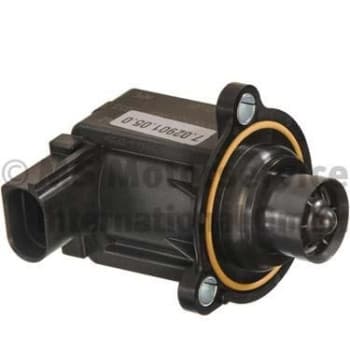






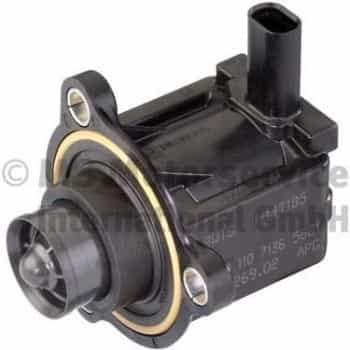

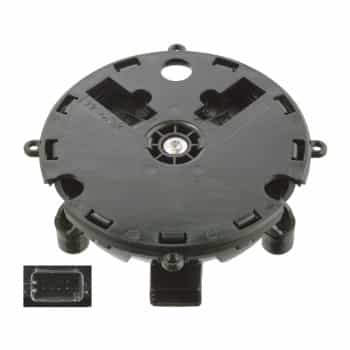
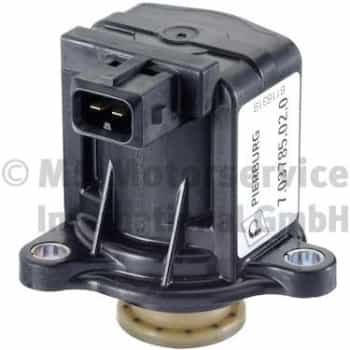


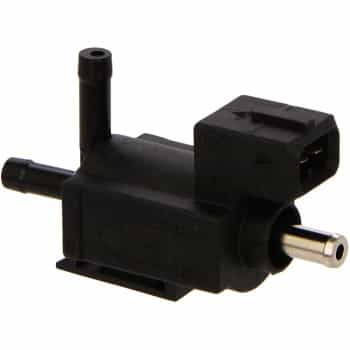


Without this valve, the back pressure from the closed throttle would cause the pressure to rise too high. This pressure becomes so great that the air has nowhere to go but back through the turbocharger. This can cause serious damage to the turbocharger, as it is abruptly brought from 100,000+ rpm to a standstill.
The bypass valve or diverter valve does its job when your car goes from full throttle to closed throttle. An additional advantage is that the turbocharger maintains its speed and therefore the next acceleration is much faster. This makes the full power available again more quickly.
A turbocharged engine compresses the air from the intake side. This compressed and cooled air is introduced into the engine via the throttle. Due to the higher pressure, more fuel can be injected and therefore more power can be generated than without a turbocharger.
However, the problem that arises with a turbocharged engine is that when you shift gears, the throttle is closed. The turbocharger is still running at full speed when shifting up, and because of the closed throttle, the pressure would have nowhere to go. The bypass valve creates an open circuit to the outside or to a bypass route.
This allows the turbocharger to maintain its speed while the throttle is closed. Besides the fact that this prevents damage, it also ensures that the turbocharger maintains its speed. This allows the turbocharger to spool up much faster after shifting and therefore power is available more quickly.